The Most Misinterpreted Behavior in Horsemanship
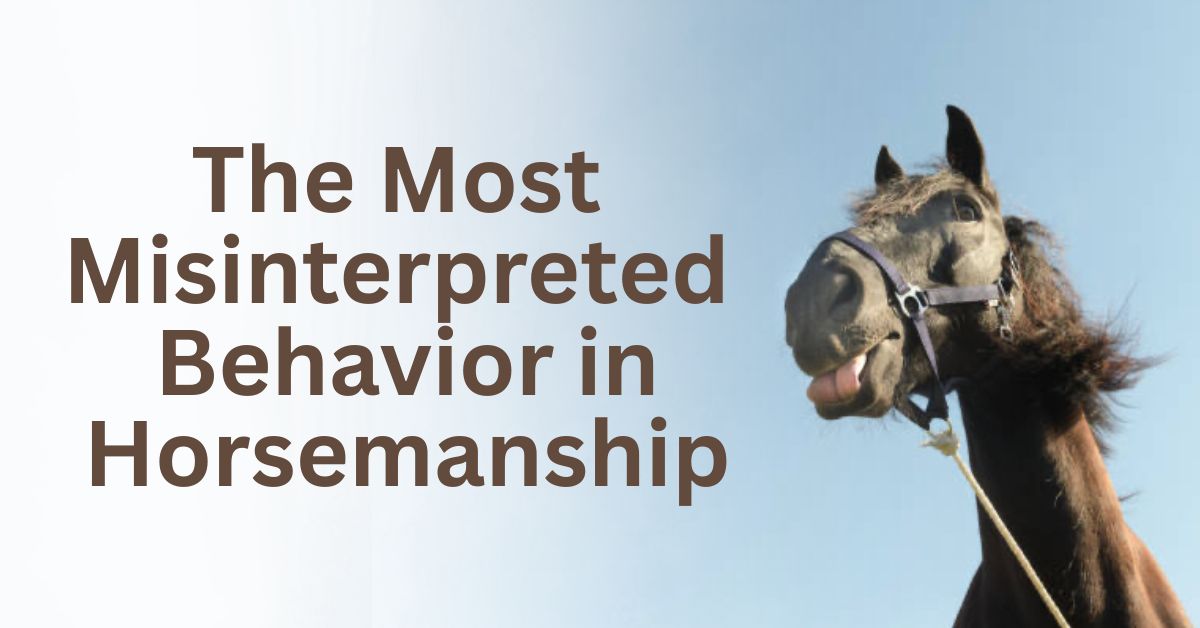
Half way through a complex lesson the rider stops for a quick break and sip of water. While they stand there horse lowers their head, licks, and chews.
“Look.. there it is. He got it! He’s processing.”
For years, I believed that too.
If you’ve spent any time around horses, you’ve probably heard or even shared that licking and chewing means a horse is understanding, submitting, or accepting what we’ve asked. It’s one of the most commonly repeated interpretations in the horse world.
But the science tells a different story. And honestly? It’s way more interesting and complex.
It’s Not a Learning Signal.
It’s a Nervous System Reset.
Licking and chewing isn’t your horse saying “I understand,” but they are in a way “processing”. It’s your horse’s body doing something automatic — a physiological shift governed by the Autonomic Nervous System.
Here’s what’s actually happening.
When a horse experiences stress — whether that’s a confusing cue, a tight muscle, or something that is simply hard — their body enters sympathetic mode. Their jaw tenses. Their mouth goes dry.
As that stress lifts, the horse’s body switches into parasympathetic mode and saliva floods back into the mouth.
That licking and chewing? That’s the saliva coming back.
It means “I was holding tension, and now I’m not.” That’s it.
The Submission Myth Has Been Debunked
For a long time, many were taught that licking and chewing meant submission — the horse yielding to the human, signaling respect or compliance. Research has put that idea to rest.
A study tracking feral horses in natural social settings found that non-nutritive chewing happened consistently after tense social conflicts ended. Here’s the part that flipped the script: the aggressive horse chewed more than the submissive one. It wasn’t about who “won.” It was simply the body marking a transition from tension to calm.
The behavior belongs to the nervous system. Not the relationship hierarchy.
So Why Does It Happen During a Relaxing Grooming Session?
This is an interesting question, because it seems to contradict everything above. If licking and chewing follows stress, why does a horse do it when you’re massaging their favorite spot?
Two things are at work here.
When you work on a tight spot during massage or bodywork, you’re creating a micro-stressor in that specific tissue. When the knot releases, the nervous system fires a localized “all clear” — and you see the lick and chew. It’s the same mechanism, just happening at a muscle-fiber level rather than a whole-body level.
And when you groom preferred zones — the neck, the withers — you’re mimicking something horses do for each other. Research shows that allogrooming, mutual grooming between horses, dramatically lowers heart rate and activates the vagus nerve. Your horse isn’t just tolerating your touch. Their nervous system is genuinely responding to it the way it would to a trusted herd member.
The Clue Before the Lick and Chew
If we shift from looking for submission to reading nervous system states, everything changes. Before the licking and chewing happens, there are quieter signals worth watching for.
A tight jaw. Wrinkled skin around the eye and mouth. A higher head. A quick or absence of blinking. A stillness that isn’t quite relaxed. These are the moments where something has been building — and catching those signs early tells you far more than waiting for the “release”.
That’s where real horsemanship lives. Not in the big, obvious signal after the tension breaks. In the small, honest ones that show you what your horse is carrying right now.
Can you tell the difference between the horse processing the stress, or the release of sore muscles?