Volunteers Don’t Just Help—They Hold Everything Together
Why Retention Matters in EAS (and How to Celebrate Volunteer Appreciation Month Meaningfully)
If you’ve ever had to cancel a lesson because you were short on volunteers, you already understand this:
Volunteers aren’t extra in EAS programs.
They are essential.
They are the steady hand on a lead rope with clear compassionate direction.
The encouragement at a rider’s side.
The familiar face that helps riders feel safe, capable, and valued.
They’re the heartbeat of the program.
And yet—many programs find themselves constantly recruiting, constantly training, and constantly starting over.
While some turnover is natural, we should be doing everything we can to help our current volunteers feel good enough to stay.
Why Retention Matters More Than Recruitment
Recruitment gets a lot of attention in EAS.
But retention is what actually builds programs.
When volunteers stay:
- Riders build trust through consistency
- Volunteer roles become clear and effective
- Lessons run more smoothly and safely
- Staff spend less time training
- Barn culture becomes stronger and more connected
In EAS, consistency isn’t just helpful—it’s comforting.
For many riders, seeing the same volunteer each week reduces anxiety, supports communication, and builds a sense of belonging.
The same is true for our horses. Our horses also develop relationships with their regular volunteers, creating a sense of order, predictability, trust, and calm.
When we retain volunteers, we’re not just saving time—we’re preserving experience, relationships, and continuity for our riders, our horses, and ourselves. We allow for deeper understanding of our programs and a higher level of knowledge and skills within them.
Why Volunteers Leave (Even When They Care)
Sometimes volunteers leave for reasons we can’t control—health, moving, new jobs, or shifting priorities.
But sometimes, that quiet “I’m just too busy” is covering something deeper.
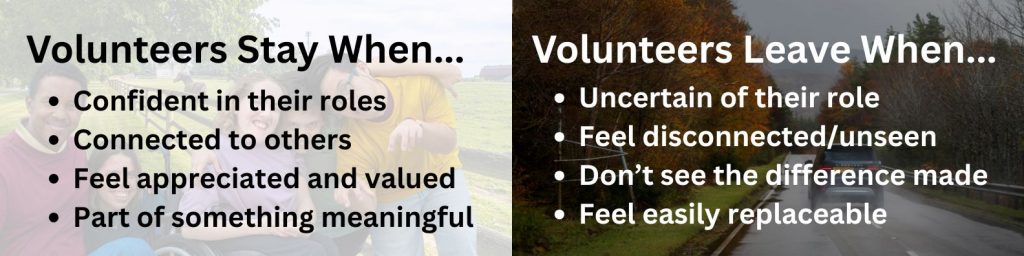
It can be hard to hear, but often volunteers leave because they:
- Didn’t feel confident in their role
- Didn’t feel connected
- Weren’t sure if what they were doing actually mattered
The good news?
These are the things we can influence.
Volunteer Appreciation Month: More Than a “Thank You”
April is Volunteer Appreciation Month, with National Volunteer Week recognized this year from April 19–25th.
It’s a great time to pause—but also to be intentional.
Instead of one appreciation day, think about building something more meaningful:
Connection. Recognition. Retention.
Because volunteers don’t stay because of one great event.
They stay because of how they feel over time.
What Actually Makes Volunteers Feel Appreciated
Volunteers don’t feel appreciated from one big gesture or a generic “thank you.”
They feel appreciated when recognition is:
- Personal
- Specific
- Timely
A general “thanks everyone!” won’t land the same as:
“Sarah, the way you supported that rider when their reins kept slipping helped them stay calm and feel successful.”
It doesn’t need to be long—it just needs to be real.
Use their name.
Reference something specific.
Connect it to impact.
And most importantly—make them feel essential, not extra.
A Simple Way to Celebrate All Month Long
Instead of doing everything at once, think of the month as 4 separate weeks:
Listen → Connect → Celebrate → Empower
Week 1: Listen
Ask your volunteers about their experience. In person or in a survey or both.
Keep it simple:
- What’s working?
- What feels challenging?
- How can we better support you?
Then, acknowledge their feedback and consider their thoughts and suggestions.
For example – you might find out some volunteers want to help participants more but they are not sure how. So you provide education on How to Build Connections With Riders of All Abilities!
Week 2: Connect
This is about building relationships, not just filling roles.
Introduce small, intentional moments of connection:
- Share volunteer spotlights
- Ask about their personal connections to this work
- Create a “Why I Volunteer” board in the barn
- Invite people for coffee and conversation
- Offer a short learning moments directed at their interest (grooming, horse behavior, etc)
- Connect with riders/families to collect notes or videos to share
When volunteers feel like they belong, they come back.
Week 3: Celebrate
This is your visible appreciation week—but it doesn’t need to be complicated.
Bring a little energy and a lot of gratitude into the barn:
- Go above and beyond to highlight their contributions
- Handwritten notes or quick personalized messages – always a winner!
- Personalized superlative style awards
- Provide food, snacks, or treats
- Share, small, useful gifts to recognize efforts or show they are part of the team (barn swag)
Even something simple, like allowing them to take time to sit with a horse, quietly groom, or hand grazing can be meaningful for volunteers. Remember, most of us have access to horses daily so we take it for granted but to many that horse time is just fleeting moments.
Week 4: Empower
End the month by looking forward.
Show volunteers that they are part of the future of your program:
- Share impact and value:
- What the volunteer hours mean from a financial contribution to the organization
- Program capacity – how many riders could be served without volunteers vs what you do serve with their support
- Horse impact – what extras are done to support the horses because of volunteer efforts?
- Invite them to bring a friend to learn more
- Utilize the prior volunteer surveys to identify and share direction/incentives
- Offer opportunities for growth:
- Invite those ready into new roles, added responsibilities, mentorship positions and more
Simple, Meaningful Ways to Show Appreciation
Outside of the weekly structure, small thoughtful efforts go a long way:
- Partner with a local business (like a coffee or bake shop) for small bulk gift cards
- Create a fun volunteer trivia game using program stats
- Put together an appreciation video with clips from staff, riders, and families
- Set up a “Wall of Fame” in your barn
- Provide snacks or baked goods during lessons
- Have a party or celebration to honor them
These things don’t need to be expensive to be effective—they just need to feel intentional.
Make Them Feel Essential—Not Extra
At the end of the day, volunteers don’t stay because of snacks, gifts, or events.
They stay because they:
- Believe in the mission
- Understand their roles
- Know their impact
- Feel like they belong
Show them the difference they make.
Tell them specifically how they helped.
Help them see where they fit.
Because in EAS programs, volunteers aren’t extra.
They are part of what makes everything possible.