Scared Rider? What to do first
It happened to me yesterday.
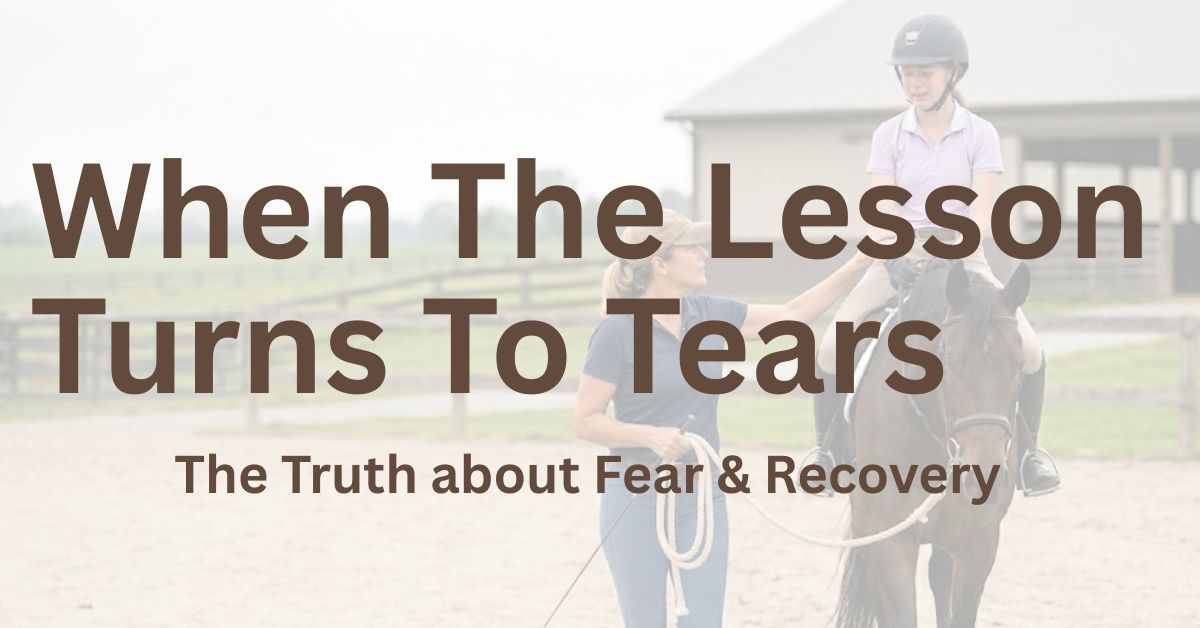
We were halfway through a lesson when a trot transition accidentally turned into a canter for a rider who wasn’t ready for a canter. She retreated into the classic panic position — folded forward, elbows back, heels creeping toward the horse’s flank, gripping with her knees and thighs for dear life. Incredibly thankful for a forgiving horse, we got him halted at the diagonal corner. As the horse stopped, I could already see it. Flushed face. Clenched jaw. Shaking hands. Shallow breath. Tears starting to form.
Things like this will happen from time to time, no matter how careful we are because learning is messy. Animals are animals and fear is very real.
What matters is how you respond in these moments to set your rider up for recovery.
The Instinct We Have to Unlearn
Most of us were trained by instructors who kept us moving. Get tough. Push through. “You’re fine.” And there’s something that feels right about that approach because resilience matters. We don’t want riders to believe fear means they have to quit. We don’t want them to avoid every challenge that makes them uncomfortable.
But there’s a difference between helping a rider move through fear and expecting them to learn while feeling overwhelmed by it.
The frightened rider is still learning.
The question is whether they’re learning about fear or recovery.
When a rider has just had a near fall, the brain is not in lesson mode. It’s in survival mode. The part of the brain responsible for processing feedback, building new skills, and integrating instruction has essentially gone offline.
Telling them to shorten their reins, sit up taller, and try again in that moment isn’t coaching.
It’s noise to an already stressed system. So skipping straight to the solution before a rider has had a chance to regulate does no good for a human trying to influence a very intuitive 1,000 lb animal.
What the Research Actually Recommends
Psychological First Aid is the leading evidence-based framework used after traumatic events. It isn’t about deep emotional processing. It’s about five things: Safety, Calm, Connectedness, Self-Efficacy, and Hope.
These map almost perfectly onto what great riding instructors already do intuitively after a frightening moment. The difference is doing them intentionally, and in the right order.
1. Safety
Before anything else: Are they physically okay? Is the immediate threat gone?
Then think about felt safety, not just actual safety. Return to the walk or halt. In some rare cases, dismounting is necessary when the horse is disregulated too. I often find myself holding the horse and walking alongside them — just being a physical, steady presence is part of the work.
2. Calm
Your calmness and composure are paramount here.
Breathe with them. Literally. Maybe have them stroke their horse or just walk some laps. Sometimes they need quiet. Sometimes a little light laughter. Sometimes a song or a light distraction is what helps them regulate.
Sometimes using some grounding techniques (unrelated to the fear) helps bring the rider back into their body and out of the threat response.
The goal isn’t to make them forget what happened. It’s to help the brain shift from current danger to I’m okay right now.
3. Connectedness
After a scary moment, isolation amplifies fear.
Your tone and your lack of judgment matter more than your words. So does not making them feel like they did something wrong. Is what happened something other riders experience? Can you name it without shame? Can you show them clearly that you see what just happened and that you are willing to support them going forward?
This way they feel like they are not navigating this alone.
4. Self-Efficacy
This is where the real confidence-building starts, and it doesn’t start with the thing that scared them.
Start where they feel they can succeed right now. That might be walking a lap independently. It might be agreeing to try the trot again on the lunge line or with someone leading. Let them tell you where their edge is, then build from there.
You’re not lowering standards. You’re rebuilding their belief that they have agency — that they can ask their body to do something and it will respond, that the horse will respond, that they are capable. That feeling of competence after fear is the foundation confidence is actually built on.
5. Hope
I’ve had moments on a horse where my heart was in my throat and I couldn’t think straight. I’ve had students who needed to sit quietly at the halt for ten minutes before they could even consider moving again. I’ve watched confident, experienced riders get completely undone by one unexpected moment.
It happens to all of us.
What separates riders who rebuild their confidence from those who don’t isn’t talent or toughness. It’s having someone in their corner who understands that fear is a normal response to a real moment, and who knows how to help them find their way back.
That’s you. That’s this work.
When Fear Becomes Curiosity
One of the biggest misconceptions about scary moments is that if we can explain what happened, the rider will feel better. Sometimes that’s true. But often, immediately after a frightening moment, they don’t need information. They need regulation first.
Think about the questions a frightened rider is actually asking.
– Am I safe?
– Can I trust this horse?
– Can I trust myself? Is this going to happen again?
Now compare that to the questions we often want to answer.
– Why did the horse do that?
– What should you have done differently?
– How can you prevent it next time?
Those are learning questions and the rider’s nervous system is still asking survival questions. This is why even the best explanation can bounce right off a scared rider. It’s not because they aren’t listening. It’s because their brain is still focused on recovering from a perceived threat.
A useful sign that a rider is becoming ready to learn again is when fear starts turning into curiosity. Instead of saying “I don’t want that to happen again,” they start asking “Why did that happen?” or “What should I do next time?”
That’s the moment education becomes powerful. Not because the information suddenly became more accurate. Because the rider is finally in a state where they can use it.
The Shift That Changes Everything
You don’t have to choose between being a good coach and being a grounded, steady presence after a scare. The best instructors are both.
The sequence matters.
– Safety first.
– Calm next.
– Connection.
– A small win.
Then confidence can rebuild because it isn’t built by pushing through fear before a rider is ready. It’s built in the moments after fear, when a rider discovers that they can come back from it.
That’s the lesson worth teaching because this is how we need to help our horses too.