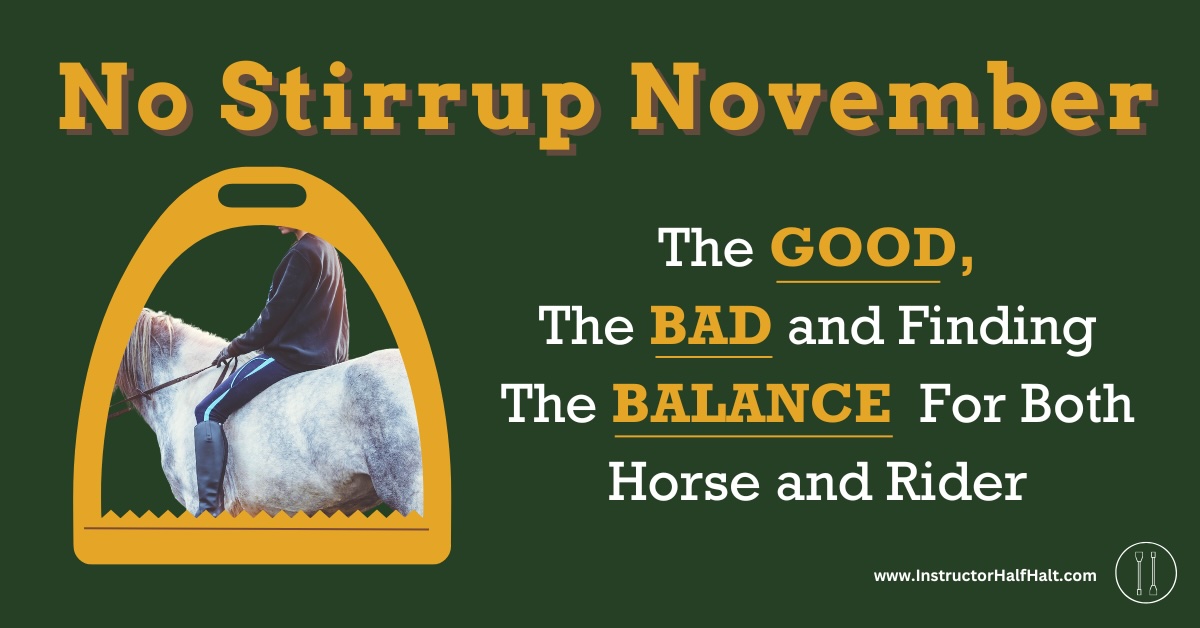
No Stirrup November: The Good, The Bad and Finding A Balance
No Stirrup November is popular in the equestrian world, where riders of all levels ditch their stirrups for a month to build leg strength, improve balance, and sharpen their riding skills. Riding instructors often join in the fun by creating games and contests to keep riders motivated throughout the month, and the hashtag #nostirrupnovember trends across social media. While there are great benefits to taking part in No Stirrup November, it’s important to consider potential risks for both riders and horses. In this post, we’ll dive into the pros, the possible concerns, and how to progress with balance, safety, and comfort for both horse and rider when we ditch the irons.
The Benefits of No Stirrup November
Participating in No Stirrup November offers some notable advantages for riders:
- Leg Strength and Stability
Riding without stirrups forces riders to engage their core and leg muscles more actively, leading to increased strength that improves endurance and accuracy for leg aids. - Improved Balance and Seat
Without the support of stirrups, riders must rely on their seat for balance rather than their legs. Removing the stirrups can help riders find a neutral pelvis position, setting up their body for optimal alignment. Additionally, riders will learn to notice and correct an unbalanced seat more quickly. - Increased Confidence
Tackling the challenge of riding without stirrups can help riders push past fear and build self-assurance. The social incentives, games, and variety of exercises during No Stirrup November can make the experience enjoyable and rewarding. Once proficient, riders often become more confident in their ability to balance even if they lose a stirrup during regular riding.
Possible Concerns to Keep in Mind
While riding without stirrups offers many benefits, it’s essential to be aware of the potential risks, which include:
- Sore Backs for Horses
Without proper preparation and progression, sudden or excessive no-stirrup work can lead to discomfort for the horse. When riders lack stability, their bouncing or uneven weight distribution can create localized pressure points or concussive pressure on the horse’s back, potentially causing soreness or even long-term back pain. - Increased Risk of Rider Falls
Riding without stirrups provides less support, which can be challenging for those not accustomed to it. The risk of falls may increase, especially during more demanding movements such as transitions to faster gaits or navigating tighter turns. - Fatigue and Muscle Strain
Both horse and rider can become fatigued more quickly during no-stirrup work, especially if it’s a new challenge. Fatigue can increase the risk of injury for both, so pacing and appropriate exercise intensity are crucial.
Finding a Balance: Tips for Safe No Stirrup Riding
To make the most out of No Stirrup November while keeping horses and riders safe, here are some tips to strike the right balance between challenge and caution:
- Ease Into It for Both Horse and Rider
If you or your students are new to no-stirrup work, start slowly. Gradually increase the amount of time spent without stirrups each ride. Start with just a few minutes and build up the duration and intensity as both horse and rider become more comfortable and confident. - Be Respectful of the Horse’s Workload
Consider your horse’s workload, along with the rider’s balance, weight, and proficiency. If the horse is a lesson horse, be extra cautious to ensure all riders are not learning this skill simultaneously to avoid back pain or burnout. - Choose Back Protection
Provide the best support you can for the horse’s back by using a properly fitting saddle and/or well-cushioned pads. These can help dampen concussion and distribute weight more evenly to reduce pressure points. - Design Smart Exercises
Start no-stirrup riding with simpler exercises. Consider having the horse led, lunged, or ground-driven to allow the rider to focus on balance and seat without accidentally pulling on the horse’s mouth. Start the trots a few steps at a time then build up to longer stretches. - Incorporate Stretch Breaks
Take short breaks during the ride to allow both horse and rider to rest, stretch and recover. Alternate between short no-stirrup exercises and regular riding with stirrups to manage fatigue and comfort. - Focus on Quality, Not Quantity
Aim for short, focused exercises that target specific skills rather than attempting a full lesson without stirrups. This helps avoid fatigue and minimize stress on the horse’s back while still benefiting the rider. - Use a Neck Strap, Grab Strap, or Hold the Pommel/Cantle
Riders can hold onto a neck strap, grab strap, or the pommel/cantle for added stability when needed. This can be especially helpful during sitting trot or other bouncy gaits to reduce impact on the horse’s back. - Listen to Your Horse
Pay attention to signs of discomfort in your horse, such as pinned ears, biting, tail swishing, or resistance to moving forward. These may indicate that the no-stirrup work is too intense. Adjust the workload and consider taking a break or consult a vet if needed. - Supplement with Off-Horse Strength Training
Encouraging your riders to practice off-horse exercises such as core and leg strength training can help riders build the necessary muscle to maintain stability in the saddle. This can reduce the impact on the horse’s back during no-stirrup riding.
Balancing the Good and the Bad: Make No Stirrup November a Positive Experience
No Stirrup November can be a valuable time for a riders growth if approached thoughtfully. While it offers great opportunities for building rider strength and balance, it’s crucial to balance the workload to avoid causing soreness in horses or pushing riders too hard.
Easing into no-stirrup work by using thoughtful exercises, proper equipment, and focusing on quality over quantity, riders can benefit from the challenge while minimizing risks for both horse and rider. Remember, the goal is to improve riding skills and build a stronger partnership with the horse— stressing over the month-long challenge isn’t worth compromising comfort or safety.
Conclusion
No Stirrup November is a wonderful opportunity to build rider strength, confidence, and balance—but not at the expense of our equine partners. By being mindful of potential risks and taking a balanced approach, riders can make this month a productive and enjoyable experience for both horse and rider.