Riding Helmet Tips for Neurodiverse Students
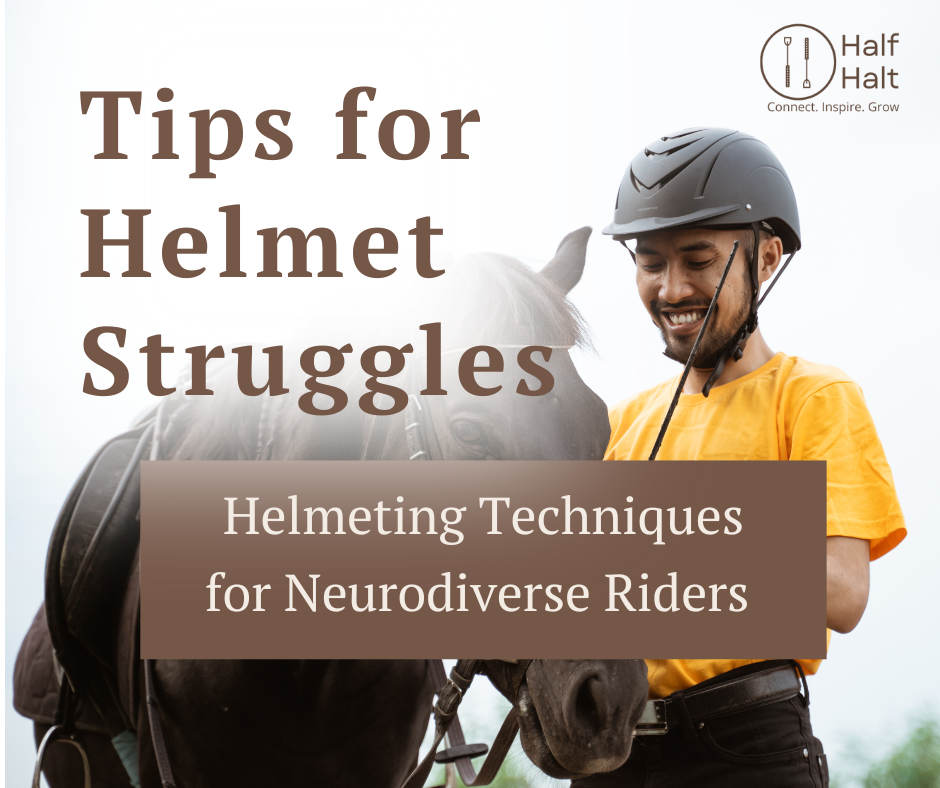
Wearing a helmet is crucial for ensuring the safety of riders, as it significantly reduces the risk of head injuries. This becomes particularly important when working with neurodiverse students, who may have unique challenges when it comes to wearing helmets. If you have an individual who is new to riding, here are some things to consider when it comes to helmets.
Ensuring Proper Helmet Fit
The first step in promoting helmet use is ensuring that it fits correctly. A helmet that is too tight or too loose can be uncomfortable and ineffective. Here are some key points to check:
- Snug Fit: The helmet should sit level on the rider’s head and not rock back and forth.
- Forehead Gap: There should be about two finger widths above the eyebrows.
- Strap Adjustment: Straps should form a V under the ears and be snug but comfortable under the chin (note V in photo is a little low).
Overcoming Resistance to Wearing Helmets
Neurodiverse students may resist wearing helmets for various sensory reasons. If a student is reluctant to wear a helmet, here are some strategies to help:
Counter Conditioning: Gradually associate helmet-wearing with positive experiences. I always encourage families to start small and at home. Having the student wear the helmet while engaging in a favorite activity at home can be extremely helpful. Activities that are part of the student’s normal routine and that produce a dopamine response are especially effective in getting the student comfortable wearing it.
Some ideas for this could be reading their favorite book, watching a show, or driving to their favorite activity. If they are a student who removes their helmet independently, it’s even better to pair it with an activity that keeps their hands distracted, like eating dinner or playing a video game.
What if My Student Won’t Even Put the Helmet On?
If your rider struggles to even put the helmet on, sometimes success is found in social motivation. Imagine your rider walking into the barn to find everyone (instructor and volunteers) are all wearing helmets! Hand their family helmets to put on. Then hand one to them and see what happens.
You could also consider suggesting to the families to bridge the behavior by trying different hats. Some riders might tolerate the helmet better with a thin safe layer in between, such as cut pantyhose or a durag. Additionally, some individuals often have everything done to them. Sometimes it’s as simple as giving the rider the helmet and giving them the time and encouragement to put it on themselves.
Managing Helmet Straps
Helmet straps can be another source of discomfort or distraction, plus, if the straps are not positioned correctly the helmet is not as effective. Sometimes riders may attempt to remove or chew on the straps. Here are some tips to manage this:
- Check Strap Fit: Ensure that the straps are not too tight or too loose. They should be comfortably snug without causing discomfort. Examine the areas of contact on their skin (note this can change as they open and close their jaw) and consider adding a thin, soft wrap to the straps at areas of contact to reduce irritation.
- Chewable Additions: If a student has a tendency to chew on the straps, you could add an extra piece of material specifically for chewing. This can satisfy their sensory needs while keeping the helmet secure.
The Dreaded Buckle
Sometimes the buckle can be a source of fear. If a student has ever had their chin pinched in a buckle, their avoidance may be related to that. In such cases, you can work with them to implement a barrier between the strap and their chin to prevent injury. For riders who struggle with fine motor skills, this approach can used to prevent injury. You can use anything thin and flexible, such as a piece of paper.
Removing helmets during the ride….
If a student is removing the hemet during the ride be sure to acknowledge that they are trying to communicate something and try to identify what it is.
- Is it a helmet sensory thing? Uncomfortable fit? Hot? Sweaty? Itchy?
- Are they trying to identify they are done with the lesson? Tired? Board? Uncomfortable somewhere else?
Trying to identify the root is going to be how you come up with a solution for this behavior.
In conclusion, ensuring that neurodiverse students wear helmets during horseback riding can be challenging but is vital for their safety. By being proactive and attentive you can often work with the rider and their families to make helmet-wearing a more comfortable and accepted part of the riding experience. With patience and creativity, we can help all riders enjoy the benefits of horseback riding safely.