Tactful Use of Focus Can Enhance Your Lessons
How to tactfully use focus to enhance your teaching.
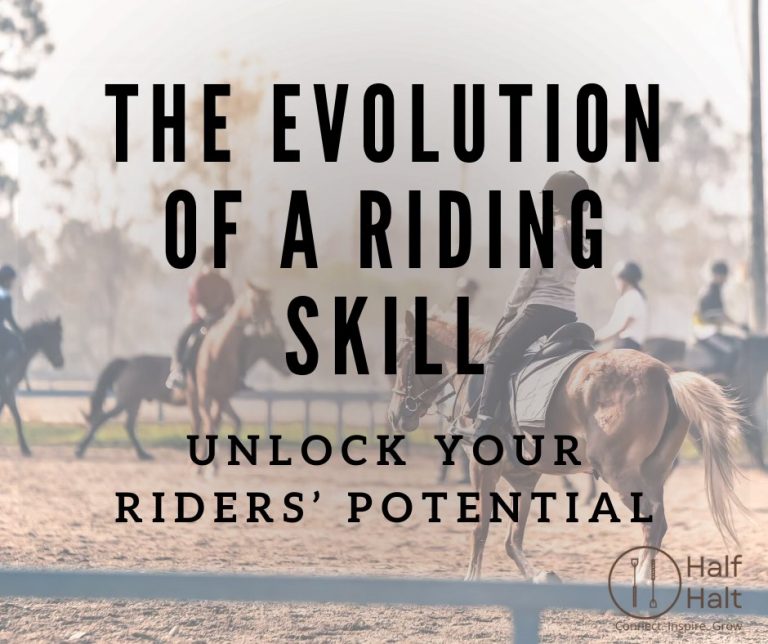
Teaching riding is largely about helping someone communicate with horses through movements of our body. The movements that we are trying to help our riders achieve are fairly unique to riding and require a process called motor learning to happen. Check out the post “The Progression of a Riding Skill” to better understand motor learning.
There are two different approaches to directing an individual’s attention during movement learning. Having a grasp of when and why you might choose to use internal focus vs external focus can help optimize your student progression of a skill.
Internal Focus
Internal focus directs the individual’s attention inward, towards their own body movements, body parts, or specific muscle actions involved in performing a skill.
Examples of internal focus cues include instructions to “bring your hands forward,” “straighten your arms some,” or “contract your abdominal muscles.”
Internal focus often involves conscious control over individual movement components and can lead to heightened self-awareness of body mechanics.
While internal focus can be beneficial for learning certain tasks or refining specific movements, it can also result in overthinking, movement stiffness, and decreased automaticity.
External Focus
External focus directs the individual’s attention outward, towards external objects, environmental cues, or the intended outcome of the movement.
Examples of external focus cues include instructions to “stretch your arms softly towards your horse’s mouth” or “bring your hands up your horse’s mane.”
External focus promotes automaticity and fluidity by allowing movements to be guided by external reference points rather than conscious control over individual body parts.
Research suggests that external focus cues optimize motor learning and performance by enhancing movement efficiency, coordination, and retention of skills.
External focus encourages the individual to rely on sensory feedback from the environment to guide their movements, leading to smoother and more natural execution of the skill.
In summary, internal focus directs attention towards internal body sensations and mechanics, while external focus directs attention towards external cues and the desired outcome of the movement.
While both approaches have their place in movement learning, internal focus can help a rider better understand what needs to happen with their body when introducing a skill while external focus is generally preferred for promoting automaticity, coordination, and optimal performance as riders start to orchestrate multiple skills simultaneously.