

These aren’t lectures or busywork. They are interactive, hands-on lessons that:
Connect directly back to riding
Build safety, awareness, and decision-making
Help riders understand why things matter — not just what to do
Go beyond instructions to teach purpose, cause, and effect
Connect actions to outcomes so learning actually sticks
Teach the “why” behind horsemanship skills
Provides teaching tips, resources and additional references
Unmounted time stops feeling like “less than” and starts feeling like part of becoming a rider.
Plus, if you’re trying to Make The Case For Unmounted Lessons – you have a clear objective to share with equestrians and their families.
Each lesson is flexible, repeatable, and easy to adapt to your needs.
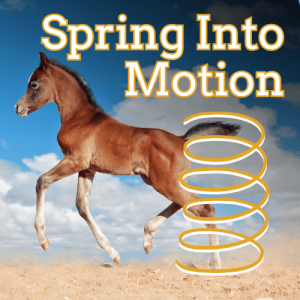
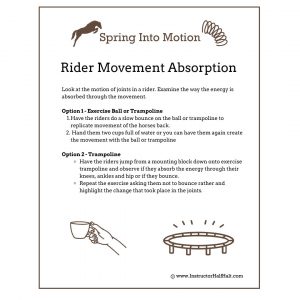
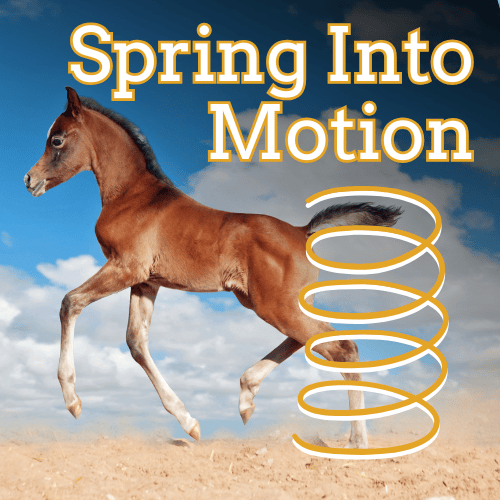
Spring Into Motion
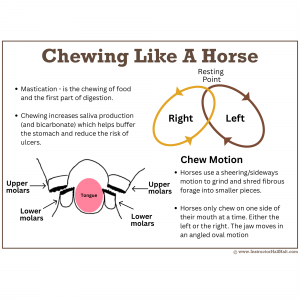
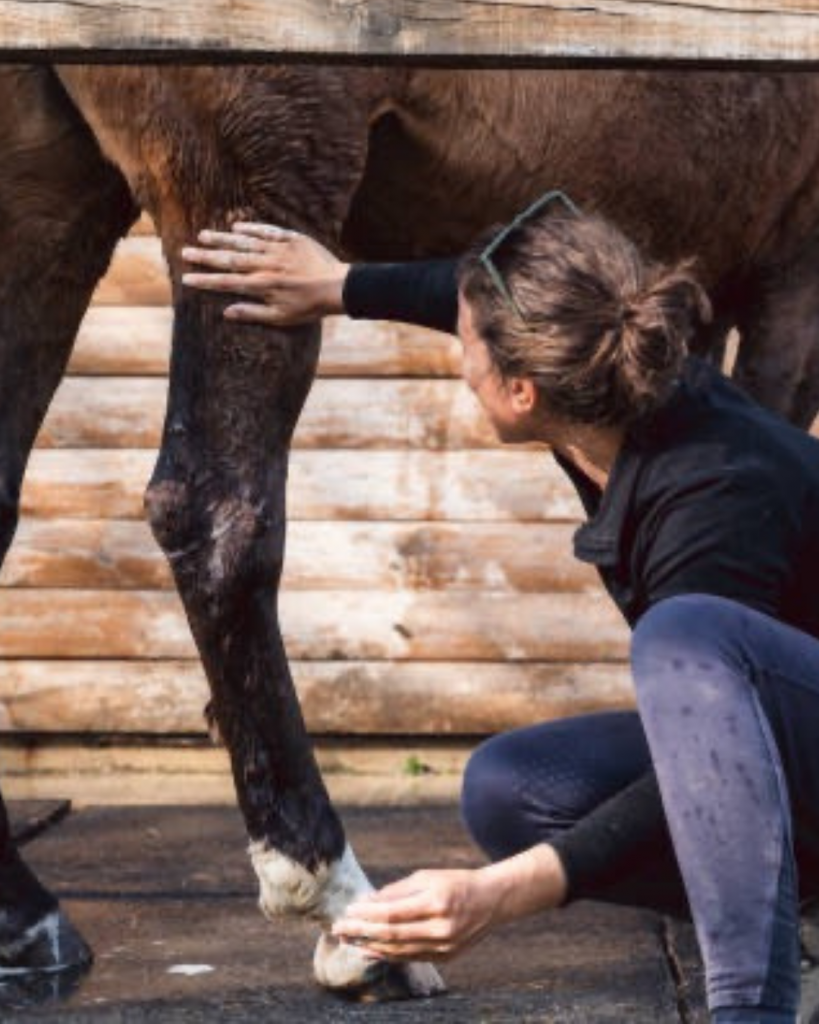
An unmounted lesson that explores the horse’s musculoskeletal system — how bones, joints, muscles, tendons, and ligaments work together for movement — and connects equine biomechanics to rider position, balance, and care.
Teaching Topics:
• Equine musculoskeletal anatomy
• How movement is created & supported
• Rider–horse body comparisons
• Warm-ups, cool-downs & injury awareness
• Practical hands-on activities
Format:
Group or Private
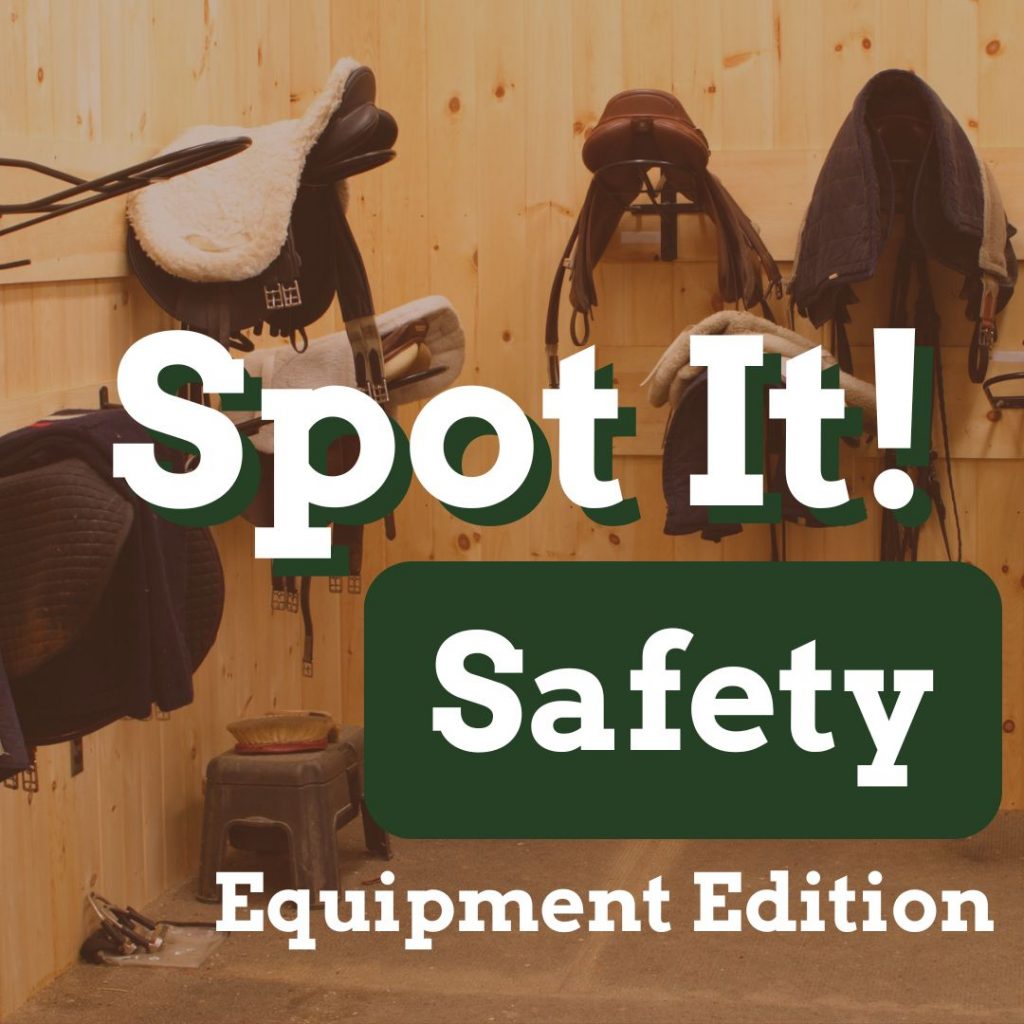
Spot It! Safety
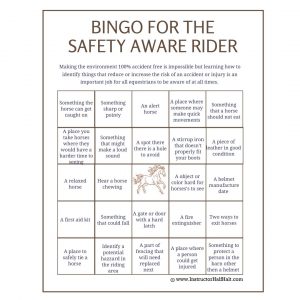
An unmounted lesson that teaches riders to identify and classify horse-related safety scenarios. Participants practice spotting risks, understanding proper gear, and performing equipment and environment checks to prevent injuries both on the ground and while riding.
Teaching Topics:
• Hazard identification and classification (Safe vs Caution)
• Rider safety gear (helmets, boots, gloves, body protectors)
• Equipment checks (tack, stirrups, reins, saddles)
• Environmental awareness (barn, arena, weather)
• Safe handling and leading techniques
• Decision-making and preventative strategies
Format:
Group or Private
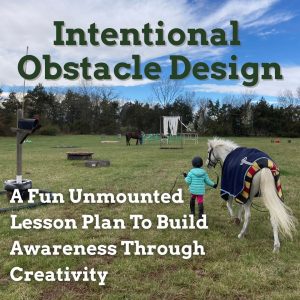
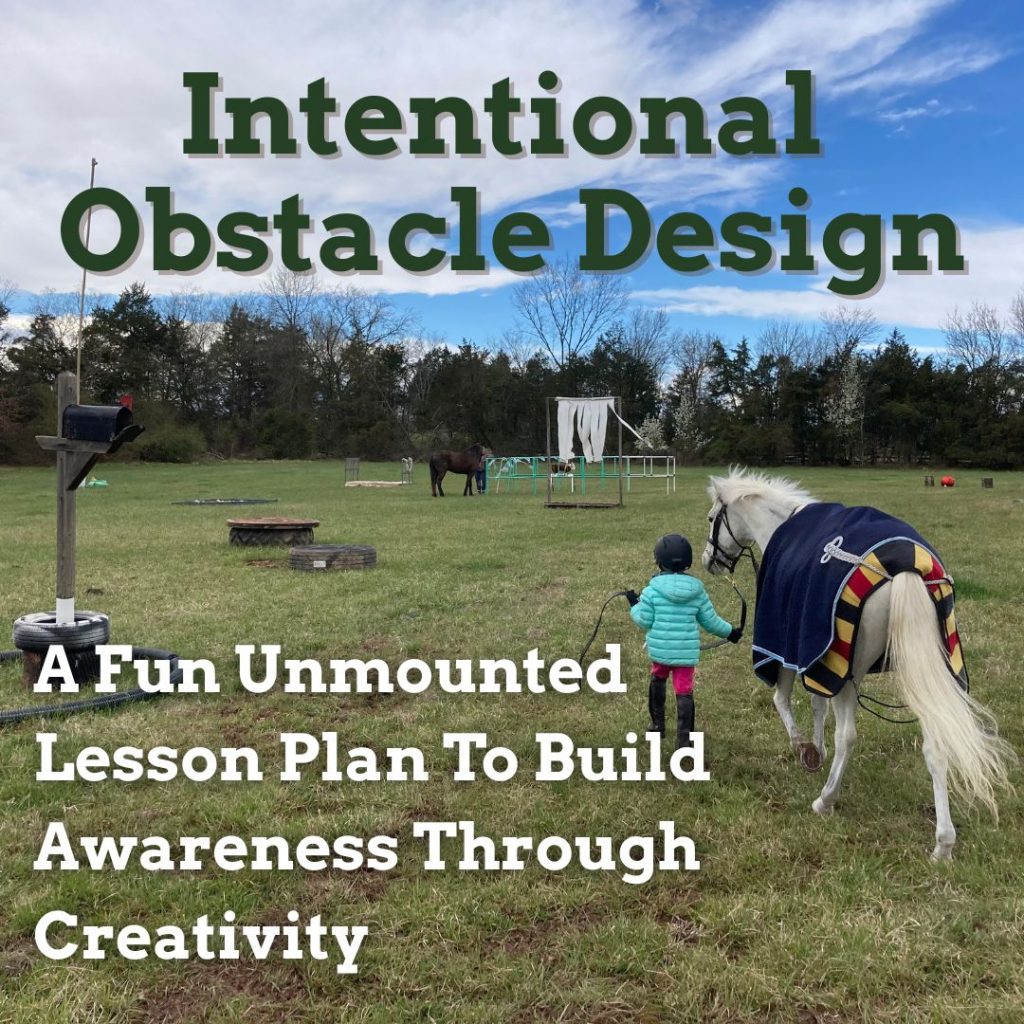
Intentional Obstacle Design
An unmounted lesson that guides riders through the process of intentionally designing equestrian obstacles — from conceptual planning to building with available materials — while considering how horses perceive and interact with challenges. Riders explore sensory elements, safety, purpose, and the skills each obstacle builds in both horse and handler.
Teaching Topics:
• Creative obstacle design process (plan → build → test)
• Sensory considerations for horses (visual, tactile, auditory, olfactory, gustatory)
• How horses interpret and move through obstacles
• Purpose and skill focus (e.g., confidence, communication, balance)
• Safety planning (footing, space, hazards, visibility)
• Worksheet‑based design documentation and reflection
Format:
Group or Private
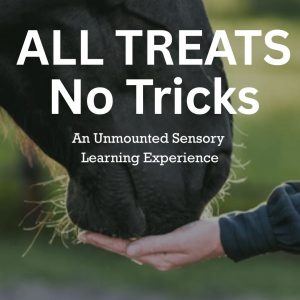
All Treats, No Tricks
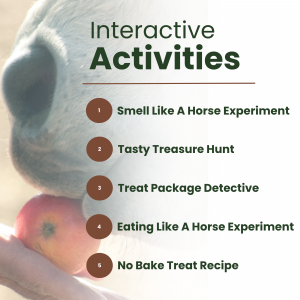
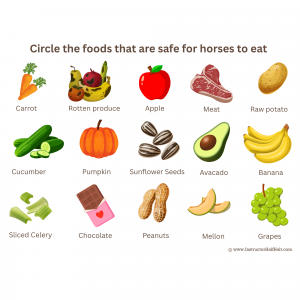
An unmounted lesson that helps equestrians understand how and why horses use their senses — especially smell and taste — when it comes to treats. Through interactive discussions, sensory activities, and demonstrations, riders learn safe treat choices, proper offer techniques, and how understanding equine perception builds empathy and safer handling.
Teaching Topics:
• Purpose of treats (reward, enrichment, trust)
• How horses experience smell and taste
• Safe vs. unsafe treat selection
• Proper and safe treat‑giving techniques
• Sensory experiments (e.g., “Smell Like a Horse” activity)
• Building empathy and connection through understanding perception
Format:
Group or Private
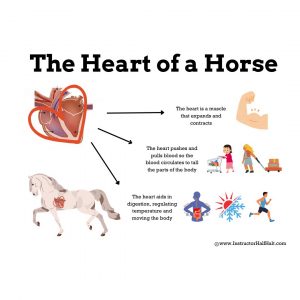
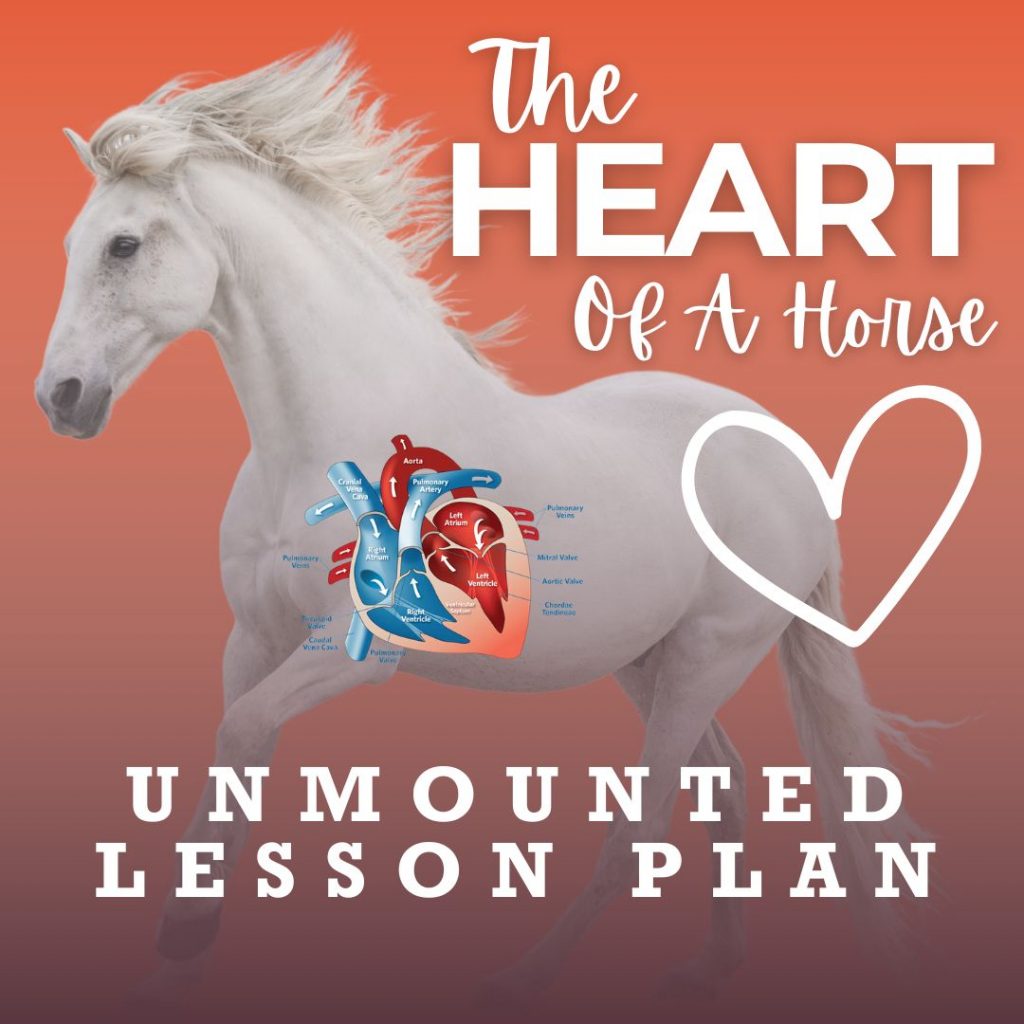
The Heart of A Horse
An unmounted lesson that helps riders understand how the horse’s heart works and how movement, effort, and emotions affect heart rate—connecting body awareness to horsemanship.
Teaching Topics:
• Equine anatomy (heart)
• Heart rate & pulse
• Effects of exercise
• Comparing horse & human physiology
• Body awareness
Format:
Group or Private
Use these lesson plans to spend less time planning and more time creating a true love of learning about horses
Email heather@instructorhalfhalt.com to learn more about workshops and webinars!